

Direct answer: This guide to the visa on arrival indonesia is written for travellers who need a straight answer, not a brochure. A visa on arrival (VOA) for Indonesia is a 30-day single-entry permit issued at approved international airports and seaports, including Bali’s Ngurah Rai, to passport holders of roughly 90 eligible countries. You can buy it at the airport counter or pre-purchase the same permit online as an e-VOA before you fly, and you may extend it once for a further 30 days. No sponsor, no invitation letter and no embassy appointment are required. The only thing that decides your eligibility is your passport nationality, the validity of your passport, and a return or onward ticket.
At a Glance
| Item | Visa on Arrival (VOA) |
|---|---|
| Length of stay | 30 days from the date of entry |
| Entries | Single entry |
| Extension | One extension of 30 days, applied for inside Indonesia |
| Where to get it | On arrival at an approved port of entry, or online as an e-VOA before departure |
| Who qualifies | Nationals of the eligible-country list published by Indonesian Immigration |
| Sponsor needed | No |
| Embassy appointment | No |
| Typical government fee | IDR 500,000 for the visa, with a similar amount for the extension |
| Passport validity | At least six months beyond your planned date of entry |
Key Takeaways
- A visa on arrival Indonesia permit is issued on the spot or online, and it is the fastest legal route into the country for a short holiday.
- It is single entry only. If you plan to hop to Singapore and come back, you need a new visa or a multiple-entry visa instead.
- The 30-day clock starts on your date of arrival, not on the date the visa was issued.
- One 30-day extension is possible. It must be filed before your original permit expires, and overstaying even by a day triggers a fine per day.
- Working, filming commercially or living long term on a VOA is not permitted. Those activities require a different permit entirely.
What the Indonesia Visa on Arrival Actually Is
The visa on arrival is a policy instrument, not a favour granted at the discretion of the officer behind the counter. Indonesia created it so that short-stay visitors from its largest source markets could land, pay a fixed fee, and clear immigration without first applying at an embassy in their home country. The permit is tied to tourism, family visits, social purposes, business meetings that involve no local employment, and transit.
That last point matters more than most travellers realise. The VOA is a visit permit. It authorises you to be present, to spend money, to attend meetings, and to move around the archipelago. It does not authorise you to earn money from an Indonesian entity, to sign a local employment contract, to shoot a commercial film, or to set up a business. If your plans include any of those, the visa on arrival is the wrong instrument and you will need to look at the employment visa route or a business-class permit instead.
Indonesia’s immigration framework is published and updated by the Directorate General of Immigration. The authoritative eligibility list lives at imigrasi.go.id, and the Ministry of Foreign Affairs publishes the parallel consular view at kemlu.go.id. Both change without much fanfare, which is why we re-check the list for every client rather than relying on a screenshot from last season.
Who Can Apply for a Visa on Arrival
Eligibility is decided by one variable: the passport you travel on. Indonesia maintains a list of eligible nationalities that has expanded steadily since the scheme was reintroduced, and it now covers the majority of the world’s high-volume travel markets — most of Europe, the Anglosphere, much of East and Southeast Asia, the Gulf states, and a long tail of others. If your passport is on that list, you qualify for the visa on arrival Indonesia permit at the border. If it is not, you must obtain a visa from an Indonesian embassy or consulate before you travel, and no amount of queuing at Ngurah Rai will change that.
Three secondary conditions are checked alongside nationality. First, your passport must have at least six months of validity remaining from your date of entry; a passport expiring in four months will be refused even if the visa itself would have been valid for thirty days. Second, you need a return ticket or an onward ticket out of Indonesia. Third, you must be arriving at a port that issues the permit — the scheme is not available at every land crossing, and it is not available at every small domestic-adjacent terminal.
Children need their own visa on arrival Indonesia record need their own passport and their own visa. A child travelling on a parent’s passport is not a thing in Indonesian immigration practice, and families who assume otherwise end up rebooking flights at the airport. If you are travelling with dependants, it is worth reading our breakdown of the tourism, family visit and transit visa before you book, because family groups sometimes need a different permit shape than a solo traveller.
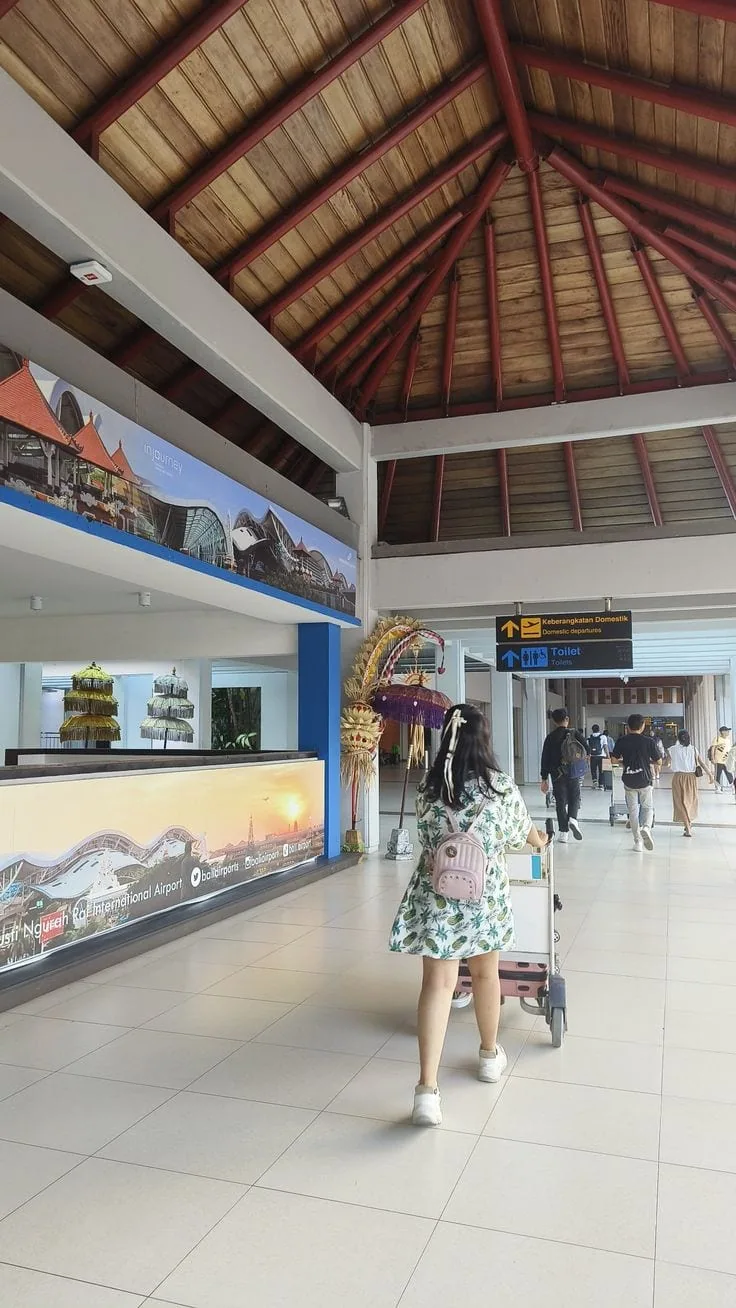
How to Apply for a Visa on Arrival Indonesia: Step by Step
There are two legitimate paths, and both end with the same permit in your passport or the same digital record against your name. Choose the one that matches how much control you want over the arrival experience.
Option A: Buy it at the airport counter
Step 1 — Confirm your eligibility. Check your nationality against the current Immigration list before you book flights. Do this first, because everything downstream depends on it.
Step 2 — Check your passport. Six months of validity beyond entry, at least one blank page, and no damage to the photo page. Renew first if you are close to the line.
Step 3 — Book a return or onward ticket. Immigration can and does ask. A one-way ticket into Bali with no exit plan is the single most common reason a visa on arrival Indonesia applicant gets pulled aside for secondary questioning.
Step 4 — Complete the customs and health declarations before you land. Indonesia uses an electronic customs declaration that you can fill in on your phone while taxiing. Having the QR code ready saves you a queue inside the terminal.
Step 5 — Walk to the visa counter before immigration. At Ngurah Rai the VOA counter sits in the arrivals hall before passport control, not after it. If you walk straight to the immigration desks you will be sent back.
Step 6 — Pay the fee and collect the sticker or record. Payment is by card or cash in the terminal; keep the receipt until you have cleared immigration.
Step 7 — Clear immigration and keep your entry stamp visible. Photograph the stamp and the visa page. You will need both when you extend, and a lost stamp is a genuinely painful problem to unwind.
Option B: Pre-purchase the e-VOA online
The electronic version of the same permit is bought through the official Immigration portal before departure. You upload your passport photo page, your return ticket and a photograph, pay online, and receive an approval that is linked to your passport number. On arrival you join the e-VOA lane, which is usually shorter, and the officer simply confirms the record.
The advantage is queue avoidance and the certainty of knowing your permit is approved before you board a long-haul flight. The disadvantage is that the official portal has peak-hour outages, the upload requirements are strict, and a rejected photo can stall your application for a day or more. When we prepare one for a client, we submit it at least a week before departure rather than the night before.
e-VOA vs Visa on Arrival at the Counter
| Factor | e-VOA (online, in advance) | VOA at the airport counter |
|---|---|---|
| Timing | Applied for days or weeks before travel | Purchased after landing |
| Queue on arrival | Dedicated e-VOA lane, usually faster | Visa counter queue, then immigration queue |
| Risk | Application can be rejected or delayed before travel | Risk is at the counter, in person |
| Payment | Card online | Card or cash in the terminal |
| Extension | Can be extended online in most cases | Requires an in-person visit to an immigration office |
| Best for | Families, tight connections, peak-season arrivals | Spontaneous travellers with flexible plans |
The extension difference is the one people underestimate. An airport-issued VOA extension means physically going to a local immigration office, usually twice, with a sponsor-style process handled by an agent. An e-VOA extension can often be completed online. If there is any chance you will want a second month, the e-VOA is the better purchase.
What the Visa on Arrival Costs
The government fee for the visa on arrival Indonesia permit is set in rupiah and sits at IDR 500,000 at the time of writing, with the extension carrying a comparable fee. In practice your total cost is three items: the government fee, whatever your bank charges for an international card transaction, and — if you use one — a service fee to whoever prepares the paperwork. We quote the government fee separately from our handling fee so that you can see exactly what goes to Immigration and what goes to us.
Be sceptical of anyone quoting a suspiciously round all-in price with no breakdown. The fee is public. A quote that hides it is usually hiding a margin.
Extending Your Visa on Arrival Indonesia
You get one extension of thirty days, and only one. It is not a rolling permit. The extension must be filed before your current permit expires, and the immigration system is unforgiving about the date — there is no grace period worth relying on.
The in-person route means attending a local immigration office for biometrics and document submission, then returning to collect the passport with the extension stamp. In Bali that means the Ngurah Rai immigration office in Denpasar, and it means a morning lost to a queue. The online route, available for e-VOA holders, is a form, a payment and a wait.
If you want the extension handled without spending a day in a government office, that is exactly the kind of work we do for clients. You can see the full scope on our Indonesia visa services page.
Common Reasons a Visa on Arrival Application Fails
- Passport validity under six months. Refused at the counter, no exceptions, no appeal.
- No onward ticket. The most common cause of secondary questioning.
- Nationality not on the eligible list. Nothing can be done at the airport.
- Arriving at a port that does not issue VOA. Check the port, not just the country.
- Intending to work. If you tell an officer you are coming to work, you will be treated as an applicant for a work permit, not a visitor.
- Previous overstay. A prior overstay can affect your treatment at the border and may need to be cleared before you return.
Arriving at Ngurah Rai: Queues, Timing and First-Hour Logistics
Bali’s international terminal is a well-run airport that becomes a bottleneck twice a day, when the long-haul arrivals from Europe and Australia land within the same ninety-minute window. The visa counter and the immigration desks both spike. If your flight lands in that window and you have not pre-purchased an e-VOA, budget ninety minutes from gate to kerbside rather than the thirty you might expect.
Two practical moves make the arrival smoother. First, buy the e-VOA and skip the visa counter entirely. Second, have your ground transport arranged before you land rather than negotiating at the exit, where the touts know you have no alternative. Our transport service exists precisely because that first hour shapes a traveller’s impression of the whole trip.
When the Visa on Arrival Is the Wrong Permit
The visa on arrival Indonesia scheme covers visits. It does not cover residence, employment, study, or repeated entries over a long period. If any of the following describe you, look at a different permit:
- You will be paid by an Indonesian employer — you need the work and employment visa.
- You will work remotely for a foreign employer for months at a time — the remote worker visa is the cleaner fit.
- You are retiring to Indonesia — the silver hair and retirement visa gives you one to five years instead of thirty days.
- You need to enter and exit repeatedly — a multiple-entry visa or an extension-bearing permit is required, because the VOA is single entry.
Choosing between these is a decision about intent, not about cost. A traveller who buys a VOA and then starts working remotely from a Canggu cafe for three months is not committing a dramatic crime, but they are out of status, and the fix at that point is expensive. Getting the permit right at the start costs a fraction of getting it wrong.
Want the visa handled before you fly?
Catara Journey prepares and submits Indonesia visa applications and e-VOA registrations from our office in Legian, Bali, and we handle extensions inside Indonesia. Message our team on WhatsApp +62 851 9091 6322 or email [email protected] with your travel dates and passport nationality.
Arriving at Night, at a Seaport, or at a Land Border on a Visa on Arrival Indonesia Entry
Airport arrival is the well-documented case, but it is not the only one, and the differences matter. At Bali and Jakarta the visa on arrival Indonesia process runs continuously, including overnight. At smaller airports the counter may close when the last scheduled international flight has cleared, which is fine until your flight is delayed into a window where nobody is staffing it.
Seaports serving international ferries and cruise arrivals handle the visa on arrival Indonesia process inconsistently. Cruise passengers are frequently processed in a batch by the ship, which means the paperwork is completed for you and the fee may already be bundled into your fare. Independent ferry arrivals should confirm in advance that the port issues the visa on arrival Indonesia stamp at all, because not every port does.
Land borders are the least predictable. Some issue the visa on arrival Indonesia permit; some issue only a different entry facility; and policies at the Kalimantan and Timor-Leste crossings are adjusted more often than airport rules. If your route involves a land border, confirm the current position with the operator running the crossing before you commit to it, and carry a printed copy of your onward booking.
Frequently Asked Questions
How long does a visa on arrival last in Indonesia?
Thirty days from your date of entry. You may extend it once for a further thirty days, giving a maximum of sixty days on a single entry. The clock starts when you clear immigration, not when the visa was issued or purchased.
Can I extend a visa on arrival without leaving Bali?
Yes. The extension is filed inside Indonesia at a local immigration office, and e-VOA holders can usually apply online. You do not need to leave the country to extend, but you do need to file before your original permit expires.
Is the visa on arrival the same as an e-VOA?
It is the same permit delivered two ways. The e-VOA is bought online before departure and linked to your passport number; the counter VOA is bought after landing. The stay length, conditions and single-entry restriction are identical.
Can I work in Indonesia on a visa on arrival?
No. The visa on arrival Indonesia permit does not authorise employment, freelance contracts with Indonesian clients, or commercial filming. Those activities require an employment visa, a remote worker visa or the appropriate business permit.
What happens if I overstay my visa on arrival?
Overstaying a visa on arrival Indonesia grant attracts a fine charged per day, and longer overstays can lead to detention and deportation with an entry ban. If you realise your permit has expired, contact an immigration agent or our team immediately rather than waiting until you fly out.
Do children need their own visa on arrival?
Yes. Every traveller, including infants, needs an individual passport and an individual visa. There is no family passport arrangement in Indonesian immigration practice.
Which airports in Indonesia issue a visa on arrival?
Ngurah Rai in Bali, Soekarno-Hatta in Jakarta, Juanda in Surabaya, Kualanamu in Medan, and a set of other designated international gateways, plus several seaports. Confirm that your specific arrival point is designated before you book, because the list is not identical to the list of international airports.
Where to Go Next
If you are still deciding which permit fits your trip, start with our overview of Indonesian visa categories. If you have already decided and simply want it processed without a queue, the fastest path is a WhatsApp message with your passport nationality, arrival date and intended length of stay. Our insight and guides section carries the rest of our practical Indonesia travel writing, and our contact page has the office address in Legian if you would rather talk in person.
For the underlying regulation rather than our summary of it, Indonesia’s visa policy framework is documented at the public visa policy reference, and the official destination marketing site at indonesia.travel is useful for planning what to do once the permit is in hand.